contact us today (816) 207-4255
contact us today (816) 207-4255
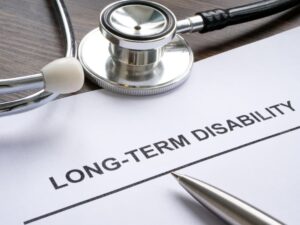 In Kansas City, a medical condition or illness qualifies for long-term disability when it prevents you from working for at least twelve consecutive months and significantly limits your ability to perform what the Social Security Administration (SSA) calls Substantial Gainful Activity. There isn’t a fixed list of qualifying illnesses. Instead, your eligibility depends on how your specific condition restricts physical or mental functions required for steady employment.
Common qualifying categories include neurological disorders like Parkinson’s disease, cardiovascular disease, cancer, respiratory issues, mental health conditions, and chronic pain. What truly determines approval is the severity and duration of your limitations and the supporting medical evidence that shows how those limitations affect your daily life and work capacity.
At Devkota Law Firm, we understand how overwhelming it feels to face life-altering injuries or illnesses that make working impossible. Many clients come to us wondering what medical conditions qualify for long-term disability, only to learn that the process involves far more than listing a diagnosis.
Our Kansas City legal team helps clients present the medical proof, functional documentation, and legal arguments needed to secure the benefits they deserve when illness or injury prevents them from earning a living.
Long-term disability (LTD) insurance provides financial support when a physical or mental condition prevents you from working for at least twelve months. According to the Social Security Administration’s Listing of Impairments, eligibility depends on whether your impairment stops you from engaging in Substantial Gainful Activity (SGA), earning more than $1,620 monthly in 2025. To qualify, you typically need to meet these criteria:
Common categories of qualifying conditions include cancer, heart disease, neurological disorders like multiple sclerosis, chronic pain, and mental health conditions such as depression or anxiety. We help clients prove how those impairments affect their ability to work, not just that they exist.
Even legitimate disability claims can be denied when the insurance company or SSA interprets evidence narrowly. Long-term disability cases are complex because they blend medical evidence, legal definitions, and strict procedural rules. Every policy contains subtle distinctions that determine whether a person qualifies for benefits. Most policies define disability under two key standards:
The definition may change after a period, often 24 months, meaning claimants who initially qualified could lose benefits once the insurer reclassifies their eligibility. Understanding what medical conditions qualify for long-term disability can prevent confusion when insurance companies apply strict definitions or shorten coverage after 24 months.
Some plans include elimination periods, a waiting period (commonly 90–180 days) before LTD benefits begin. Missing deadlines or misunderstanding these terms can lead to unexpected denials. Our firm guides clients through this maze early, reviewing policy language line by line and documenting how symptoms restrict their occupation and general work capacity.
Insurance companies rely on restrictive definitions that can make approval difficult. Some policies recognize disability only for specific job duties, while others require total inability to work in any capacity. We carefully analyze each clause to identify hidden time limits, exclusions, and shifting definitions that could limit coverage.
Our team interprets this language early, helping clients avoid common missteps—like describing pain without matching the insurer’s definitions or missing deadlines that lead to automatic denial.
Insurance companies often appear cooperative but use subtle tactics to delay or deny claims. We’ve seen adjusters employ strategies such as:
These tactics can wear down even strong applicants. We counter them with clear documentation, prompt follow-ups, and persistent communication to protect every client’s rights.
Client Reviews
 3 months ago
I had a great experience with Tarak and Robert as my injury lawyers. Their knowledge of the law and commitment to my case were exceptional. Thanks to their efforts and the other paralegals, I received a good compensation for my injuries. If you’re looking for a dedicated injury lawyer in Kansas City, I highly recommend this law firm.
View More Reviews on Google Maps and Yelp
Most clients ask what medical conditions qualify for long-term disability (LTD). The answer is how severely those conditions limit a person’s ability to maintain consistent employment. Certain conditions frequently meet the LTD criteria because they cause significant physical or cognitive limitations.
To help clients and readers understand, the Social Security Administration (SSA) outlines major categories of impairments that often qualify for benefits under its Listing of Impairments. These include:
Each requires detailed evidence showing the condition’s functional impact. Devkota Law Firm connects those medical findings with work-related consequences so insurers cannot dismiss a diagnosis as “manageable.”
Musculoskeletal injuries are among the top causes of long-term disability. Chronic back pain, herniated discs, and degenerative arthritis often make lifting, standing, or sitting for extended periods impossible. As mentioned in the SSA’s Blue Book, such conditions must show:
Many clients develop these conditions after car crashes or workplace accidents in Kansas City. We gather medical evidence and expert testimony to connect their symptoms directly to their loss of earning capacity.
Mental health challenges often go unseen but can be just as disabling. Depression, anxiety, bipolar disorder, PTSD, and schizophrenia can impair focus, motivation, and reliability. These conditions are recognized by SSA disability standards when properly documented.
We help clients prove that emotional or cognitive symptoms make steady employment unrealistic. Our team gathers psychologist evaluations, therapy notes, and medication histories to demonstrate the daily impact of these conditions on work performance and consistency.
Some disabilities, like chronic fatigue syndrome or fibromyalgia, don’t always show up on medical imaging. Others, like lupus, multiple sclerosis, or diabetes, can fluctuate unpredictably, making consistent work impossible. Common examples include:
Insurance companies often question these conditions because symptoms vary. We emphasize consistent treatment records, doctor statements, and symptom journals that prove how unpredictable flare-ups make reliable employment unattainable.
A denial doesn’t mean you’re out of options. According to the Social Security Administration, evaluators review your medical conditions, age, education, and work background before deciding if you can perform any other job. Still, insurers and administrators deny claims for predictable reasons. Common causes include:
Here’s what to do next:
Many applicants who initially qualify based on what medical conditions qualify for long-term disability still face denial because insurers interpret medical evidence too narrowly. Our firm frequently represents Kansas City clients through these appeals, presenting compelling evidence and challenging procedural errors to protect their right to long-term benefits.
Having a diagnosis isn’t enough; you must show how your symptoms interfere with performing regular job tasks. The SSA and insurers evaluate residual functional capacity, or what you can still do despite your condition. For example, symptoms can limit:
Two people with the same medical diagnosis may have entirely different levels of impairment. We translate your experiences into compelling legal documentation, connecting medical facts to real-world consequences.
At the end of the day, understanding what medical conditions qualify for long-term disability is only the beginning; getting insurers or the SSA to recognize your limitations is the real challenge.
At Devkota Law Firm, we stand up for injured and disabled workers across Kansas City whose stability has been shaken by unexpected illness or injury. We handle communication, documentation, and appeals while you focus on healing.
You’ve worked hard for your future. Don’t let an insurance company or government agency deny your protection. Contact Devkota Law Firm today at (816) 207-4258 for a free consultation and let our team fight for the long-term disability benefits you deserve.
Tarak Devkota is the founder and managing partner of Devkota Law Firm LLC, dedicated to representing individuals in Kansas and Missouri. Practicing law since 1999, Mr. Devkota has led numerous high-stakes cases involving personal injury, insurance disputes, and claims against government entities. Known for his exceptional jury trial expertise, Tarak has successfully resolved complex litigation cases, consistently advocating for justice on behalf of his clients.
•Over 25 years of legal experience in Kansas and Missouri.
•Founder of Devkota Law Firm LLC, specializing in personal injury and governmental liability.
•Recognized for taking on challenging cases and achieving outstanding results.
Linkedin Page: Tarak Devkota
Every day across Kansas City, thousands of people step into elevators trusting the ride will be routine and uneventful. Most times it is, yet when something goes wrong, the result...
Learn More

In Kansas City, the state’s comparative negligence law impacts personal injury cases by lowering the compensation you can recover based on your percentage of fault. Missouri app...
Learn More
Blunt force trauma to the head often happens in a split second, whether you slip on ice outside a Kansas City shopping center, get hit by another driver running a red light, or ta...
Learn More
This page has been written, edited, and reviewed by a team of legal writers following our comprehensive editorial guidelines. This page was approved by Founding Partiner, Tarak Devkota who has more than 20 years of legal experience as a personal injury attorney.
Schedule a free consultation with one of our experienced lawyers today by filling out the form below.
NO FEE, UNTIL WE WIN YOUR CASE

4010 Washington Street, Suite 350 Kansas City, MO 64111
315 W Kansas Avenue
Independence, MO 64050
320 W 21st St,
Wichita, KS 67203


 Eng
Eng
 Esp
Esp
 Call Us (816) 207-4255